
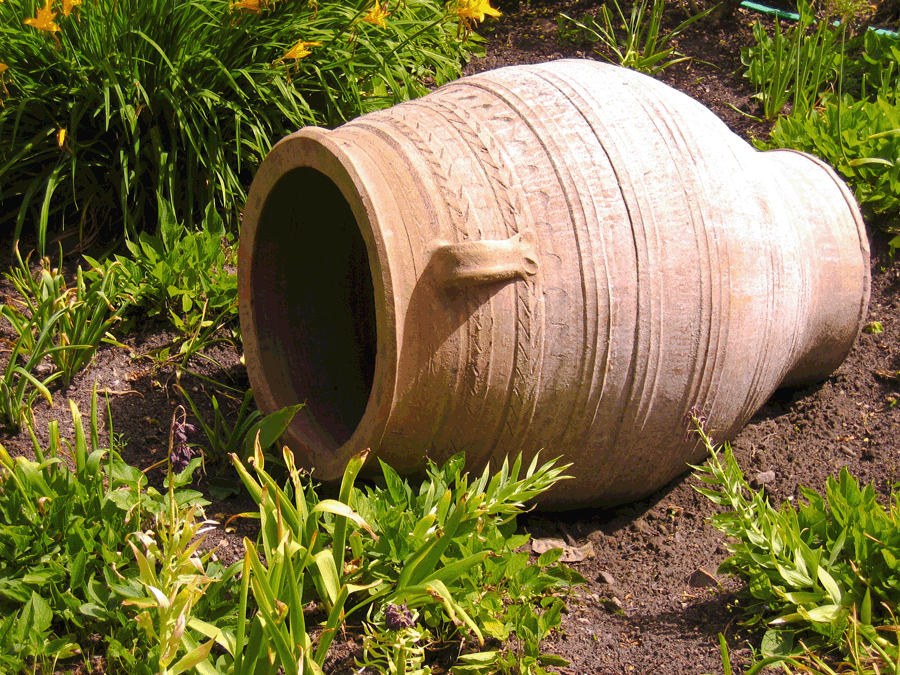
 The only hard-and-fast rule of creative writing is that there are no hard-and-fast rules. For every writer who swears that you must have an outline to organize your ideas before you begin a story, another one says that outlines are useless. Organizing your ideas is what a first draft is for.
A first draft is the clay from which the finished work is molded. It’s not supposed to be any good; it’s for the author’s eyes only. The author must have the freedom to write a first draft without a critical eye challenging the flow of ideas. For most writers, the notion of showing a first draft to a critiquing group is counter-intuitive. But some beginning writers working on the first draft of a novel may benefit from the feedback of a critiquing group. Whether the benefits outweigh the risks depends on the author—and the critic. Here are some things to consider before sharing your raw manuscript.
What are your goals?
A critiquing group is not a support group. Yes, providing support is one of the critics’ roles; but their primary job is to give constructive feedback, identifying what’s working and what’s not in your manuscript. In the beginning, hearing this feedback can be traumatic. The first time I read through critiques of my work, all I saw were the negative comments. On the second read-through, I noticed that there were positive ones as well. Yet my brain hadn’t even processed them: it was as if I were reading them for the first time.
Your primary goal when seeking critiques should be to learn how you can improve your work. If it’s praise you want, show your manuscript to your mom or your best friend. Members of a critiquing group aren’t doing their job if they’re not honest. Continue reading “Unearthing the Clay: Pros and Cons of First Draft Critiques”

 Write with Personality